There’s a moment — you’ve found the perfect lehenga, the blouse fits like it was made for you, and then you drape that one dupatta and suddenly everything clicks. That’s the power of the right piece. And in 2026, the designer dupatta has finally stepped out of its supporting role and become the headline act.
Season after season, I’ve watched this accessory evolve. What was once an afterthought — something bundled with a suit or thrown across a shoulder — has become the single most expressive element in ethnic dressing. Brides are spending as much time choosing their dupatta as they are their lehenga. Festive shoppers are hunting for statement pieces that work across multiple outfits. And boutique buyers? They’re placing dupatta-only orders like never before.
So what’s actually trending this year? Let me walk you through everything worth knowing.
Why Designer Dupattas Are More Popular Than Ever
The shift has been building for a few years, but 2026 feels like a tipping point. Social media styling culture, the resurgence of handloom appreciation, and the rise of mix-and-match ethnic dressing have all contributed to making the designer dupatta a must-have rather than a nice-to-have.
There’s also something more personal happening. Women are increasingly rejecting the idea of a “complete set” that dictates every element of their look. They want agency. A beautifully embroidered dupatta paired with a plain kurta, or a Banarasi dupatta layered over a contemporary silk dress — these combinations feel fresh, intentional, and deeply personal.
The market has responded. Designers who once treated dupattas as secondary pieces are now launching dedicated collections. And the craftsmanship? It’s extraordinary right now.
Latest Designer Dupatta Trends in 2026
Before we go fabric by fabric, here’s the broad picture: 2026 is a year of contrasts. Heavy meets minimal. Traditional weaves meet contemporary silhouettes. Deep heritage colors meet unexpected pastels. The most exciting trends sit right at those intersections.
Tonal dressing with a twist — wearing a dupatta in a slightly deeper or lighter shade than the outfit — is huge right now. It looks intentional without being matchy-matchy. Similarly, dupattas with contrast-colored borders are everywhere, giving a graphic, almost architectural quality to otherwise simple outfits.
The return of long, floor-grazing dupattas is another major story this season. After years of shorter, more manageable styles, the drama is back. At weddings especially, there’s a clear appetite for dupattas that billow and trail.
Banarasi Designer Dupatta Trends
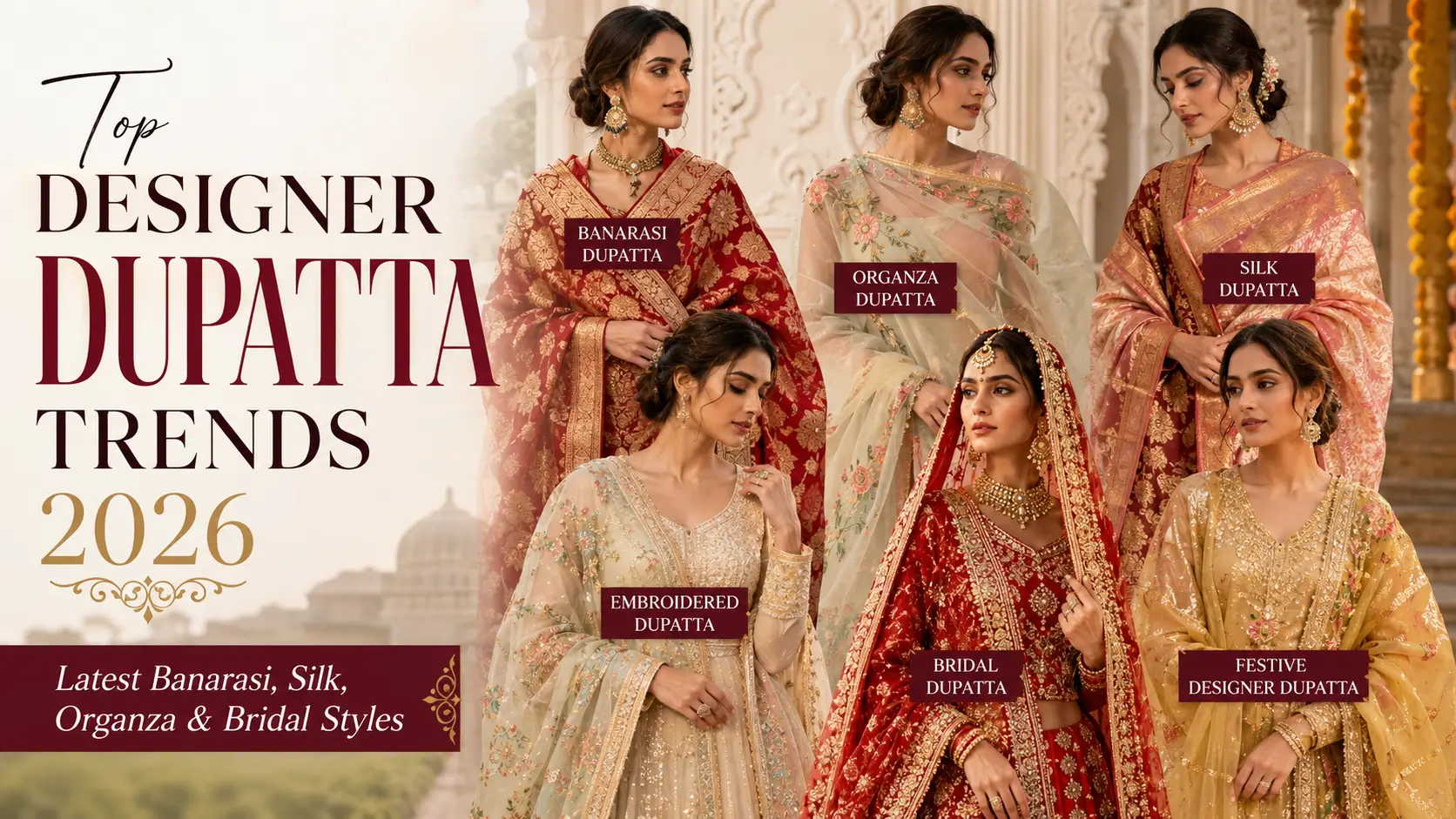
Banarasi weaves are having one of their strongest moments in recent memory, and I say that having covered Indian fashion for a long time. There’s a renewed reverence for the craft — buyers are asking about the weave, the thread count, the origin.
What’s changed is how these dupattas are being styled. Traditional heavy Banarasi dupatta designs are now being paired with minimalist kurtas — even solid-color leggings or palazzos. The dupatta does all the talking. Younger buyers particularly love this approach because it lets them invest in one exceptional piece and build multiple outfits around it.
In terms of specific Banarasi trends: gold and silver zari work on deep jewel tones like emerald, ruby red, and midnight blue is selling exceptionally well. There’s also growing demand for Banarasi tissue dupattas — lighter than traditional brocade, with a luminous quality that photographs beautifully. If you’re shopping for a wedding season or a significant festival, a well-chosen Banarasi piece is never a wrong investment.
Organza Designer Dupatta Trends
If Banarasi represents heritage, organza represents modernity — or at least, the elegant intersection of old techniques and new sensibility. The organza dupatta trend has been building steadily, and in 2026, it’s fully arrived.
What makes organza so compelling right now is its versatility. It’s lightweight enough for summer weddings and festive daytime events, yet it holds embellishment — embroidery, sequins, thread work — beautifully. Designers are working with double-layered organza to create depth without adding weight, which is genius for women who love drama but find heavily padded dupattas uncomfortable.
Hand-painted organza dupattas are a personal favorite of mine this season. You’ll find botanical motifs, abstract florals, and even geometric patterns rendered in soft watercolor-style washes. These aren’t mass-produced — they’re genuinely artisanal, and that shows in how they wear.
Pastel organza with delicate gold zari borders is also trending strongly. It’s the kind of piece that works at a friend’s Mehendi as effortlessly as it does at a formal evening event.
Embroidered Designer Dupatta Styles
Embroidery is where personal taste really comes through, and the range available in 2026 is almost overwhelming in the best way. A few styles worth paying attention to:
Resham and zari thread work remains the backbone of traditional embroidered dupattas, but contemporary designers are placing the embroidery asymmetrically — concentrated at one end or scattered in deliberate clusters rather than covering the full surface. This approach looks more modern without abandoning craft.
Mirror work and gota patti are experiencing a strong revival, particularly for festive dupattas. The reflective, celebratory quality of these embellishments feels perfectly suited to the current mood in fashion — there’s a real appetite for joy and maximalism after years of pared-back dressing.
Chikankari on silk is a combination I’ve been excited about for a while, and it’s finally getting mainstream attention. The delicacy of the embroidery against the luster of silk creates something genuinely exquisite. These pieces work beautifully as standalone fashion statements and are among the most photographed styles on Instagram right now.
Heavy zardozi work reserved for bridal dupatta collections is also reaching new levels of detail. Brides are requesting custom motifs — family crests, florals from the wedding venue, meaningful symbols — worked into the embroidery. If you’re planning a bridal purchase, give yourself time to explore these customization possibilities.
Celebrity-Inspired Designer Dupatta Fashion
It would be impossible to write about dupatta trends without acknowledging the celebrity influence, even if some of us fashion editors have complicated feelings about how it shapes consumer behavior. The reality is that what appears on screen and at weddings attended by public figures does move the market.
The styling choices creating real conversation this year include dupattas worn as stoles over Western outfits — a blazer and trousers with an embroidered silk dupatta draped like a scarf. This crossover styling is particularly popular with women attending destination weddings who want flexibility in their wardrobe.
Double dupatta styling, long associated with traditional bridal looks, is being reinterpreted for non-bridal wear. A lighter organza dupatta layered over a heavier Banarasi one creates a beautiful textural effect that’s genuinely striking in person.
Designer Dupatta Colors Trending in 2026
Color is where this season gets particularly interesting. The palette is broader than it’s been in years, which means there’s genuinely something for every taste.
Ivory and warm whites are significant. Not bridal-white necessarily, but the warm, slightly golden tones of natural silk or cream georgette. These are elegant, work across multiple outfit colors, and feel fresh after several seasons dominated by bolder hues.
Sage green and dusty rose continue their reign for festive occasions — these tones photograph beautifully and feel contemporary without being trendy in a way that will date quickly.
For those who love drama: deep plum, burnt orange, and forest green are the statement colors of the season. These work particularly well in Banarasi weaves where the zari shimmers against the darker base.
And then there’s the unexpected trend of multicolor dupattas — pieces where the color shifts from one end to the other through dyeing techniques like shibori, ombre, or handblock combinations. These are bold choices but utterly distinctive.
How to Style Designer Dupattas for Weddings and Festivals
Styling is where theory meets reality, so let me share some approaches that actually work rather than just look good in flat-lay photographs.
For weddings as a guest, the key is matching the weight of your dupatta to the occasion. A heavy embroidered silk dupatta over a lighter kurta creates the formal effect without requiring a full heavy suit. Use a single pin at the shoulder to keep it in place — the draped, slightly undone look is far more elegant than a perfectly pinned, immovable arrangement.
For festival dressing, allow yourself to have fun. Bright colors, mirror work, gota — this is the moment for it. Layer a lightweight festive dupatta over a plain anarkali and you have an outfit that’s simultaneously traditional and effortlessly put-together.
For brides, the dupatta choice is genuinely one of the most important styling decisions you’ll make. Heavy bridal dupattas with zardozi work photograph magnificently but do require careful pinning and sometimes a dedicated person to manage the drape. Consider having a second, lighter dupatta for the reception if you want more freedom of movement.
How to Choose the Right Designer Dupatta Online
Shopping for a designer dupatta online requires a bit more diligence than in-store shopping, but it’s entirely manageable if you know what to check.
Fabric description matters. Look for specific fabric names — pure silk, organza, georgette — rather than vague terms like “premium fabric.” Legitimate sellers can describe what they’re selling.
Check the measurements. Dupatta lengths vary considerably. A 2.5-meter dupatta drapes very differently than a 2.25-meter one. For bridal or heavy draping styles, you want the longer length.
Look at the embroidery detail images. Any reputable retailer will provide close-up shots of the embroidery or weave. These reveal the actual quality far better than the full-length product shot.
Read the care instructions. High-quality designer dupattas require specific care — hand washing or dry cleaning for silk, gentle handling for embellished pieces. If care instructions aren’t mentioned at all, that’s worth querying before purchase.
Common Mistakes Buyers Make
Having watched thousands of women shop for ethnic wear over the years, certain patterns repeat themselves.
Buying to match too precisely. The most stylish outfits usually have some intentional contrast. A dupatta that’s an exact color match to a lehenga can look flat and costume-like. Aim for complementary, not identical.
Ignoring fabric weight relative to the occasion. Heavy embellished dupattas at daytime events in warm weather are genuinely uncomfortable. Consider the practical context alongside the aesthetic.
Overlooking the border. The border design frames the entire dupatta and is often what catches the eye first. Pay as much attention to border work as you do to the main body embellishment.
Skipping the drape trial. If you’re buying in person, actually drape the piece rather than just holding it up. The way a fabric moves and settles is part of what you’re purchasing.
Explore AR Silk Lifestyle’s Designer Dupatta Collections
Before we wrap up — if you’re actively looking to shop, the AR Silk Lifestyle collection genuinely covers the breadth of what’s trending this season. From handwoven Banarasi dupattas to hand-painted organza, embroidered silk, and bridal pieces with custom zardozi work, the range reflects exactly the kind of craftsmanship this season calls for. The wholesale dupatta options are also worth exploring for boutique owners looking to stock trending styles.
Browse the full designer dupatta collection and find the piece that makes your outfit click.
Frequently Asked Questions
1. What is a designer dupatta?
A designer dupatta is a crafted accessory featuring intentional design elements — handloom weaves, embroidery, embellishments, or artistic prints — distinguishing it from plain or mass-produced alternatives. The design may come from the fabric itself, like a Banarasi brocade, or from applied work like hand embroidery or block printing.
2. Which dupatta fabric is best for weddings?
Silk and Banarasi brocade remain the most traditional and celebrated choices for weddings. For brides who prefer lighter weight, organza with embellishment offers an elegant alternative. For wedding guests, georgette and chiffon work beautifully and are easier to manage throughout a long day.
3. How do I care for an embroidered silk dupatta?
Most embroidered silk dupattas should be dry cleaned rather than washed at home. If hand washing is necessary, use cold water with a very mild soap, support the full weight of the fabric while wet, and lay flat to dry. Never wring or hang a wet silk piece.
4. What size dupatta should I choose for bridal wear?
For bridal styling, particularly if you plan to pin the dupatta to your head, look for a minimum length of 2.5 meters. This gives enough fabric for a proper drape over the head and shoulder while still having length to trail beautifully.
5. Can I style a designer dupatta with Western clothes?
Absolutely, and this is one of the strongest trends in 2026. An embroidered or printed dupatta worn as a stole over trousers and a blazer, or draped over a simple dress, creates a distinctive fusion look that’s very much in fashion.
6. What makes a Banarasi dupatta different from other weaves?
Banarasi dupattas are woven in Varanasi using specific techniques involving zari (metallic thread) integrated into silk or cotton fabric. The weave creates motifs with genuine metallic shimmer that no printed alternative can replicate. Authentic Banarasi work has a heaviness and luster distinct from imitations.
7. Are organza dupattas suitable for all seasons?
Organza is particularly well-suited for spring and summer events due to its lightweight, breathable quality. For winter weddings or evening events, an embellished organza dupatta can work beautifully, though you may want a shawl or heavier wrap for outdoor portions.
8. How can I tell if an online dupatta listing is genuine silk?
Look for specific descriptions like “pure mulberry silk” or “Katan silk” rather than just “silk-like.” Check whether the seller provides GST invoices (for Indian purchases), as certified silk products typically come with proper documentation. Price can also be indicative — genuine handwoven silk dupattas have a floor price below which quality cannot be maintained.
9. What dupatta colors work for multiple outfits?
Ivory, champagne, and deep navy are the most versatile investment colors — they complement the widest range of outfit hues. If you’re buying a single special piece, a deep jewel tone with gold zari work will pair with more colors than a dupatta that precisely matches one specific outfit.
10. Are wholesale designer dupattas available for boutique buyers?
Yes. Several retailers including AR Silk Lifestyle offer wholesale dupatta options with minimum order quantities. This is ideal for boutique owners wanting to stock curated designer pieces without committing to single-item pricing.
Conclusion
2026 is a genuinely exciting moment for ethnic fashion, and the designer dupatta sits at the center of it. Whether you’re drawn to the heritage weight of a Banarasi brocade, the ethereal lightness of hand-painted organza, or the celebratory sparkle of mirror work — there’s a piece being made right now that belongs in your collection.
The most important thing? Choose something that feels like you. Trends inform good choices; they shouldn’t make them for you. Trust your instinct about what makes you feel beautiful, invest in quality craftsmanship, and wear it with the confidence that comes from knowing you’ve chosen well.