If you’ve ever stood in front of a mirror holding a beautiful silk dupatta and thought — I have no idea how to wear this well — you’re not alone. And this guide was written for exactly that moment.
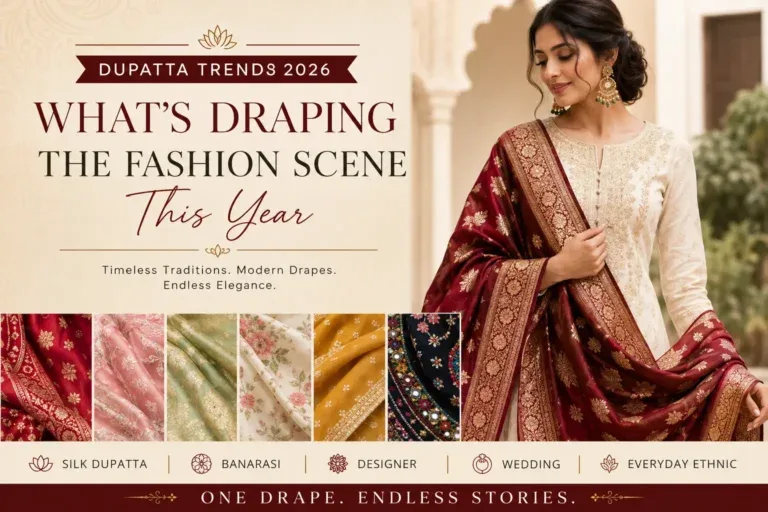
Knowing how to style a silk dupatta for weddings, Diwali, sangeet, and festive occasions is the kind of knowledge that changes how you dress permanently. The same dupatta can look ceremonial at a morning pheras, editorial at an evening reception, and effortlessly festive at a Navratri gathering — depending entirely on how you drape and pair it.
Whether you’re a bride building your trousseau, a wedding guest finalising your look, or someone who simply loves dressing well for occasions that matter — what follows is everything you need to know about silk dupatta styling, from fabric selection to draping techniques to the most common mistakes worth avoiding.
The Practical Case for Silk
Spend any time around the tailors of Varanasi, the boutique stylists of South Delhi, or the weavers of Kanchipuram, and you’ll find one point of consistent agreement: for weddings and festivals, no fabric performs like silk. That’s not nostalgia talking — it’s craft reality.
Silk has a natural weight that makes it drape without effort. Unlike synthetic alternatives that either cling awkwardly or billow too loosely, silk finds its shape and settles. It falls with a quiet authority. The natural sheen shifts depending on the light — warm and golden near evening diyas, cooler and more refined in morning daylight — and that responsiveness makes it one of the most photogenic fabrics in any wedding setting.
Beyond aesthetics, silk earns its place through longevity. A well-stored silk dupatta can be worn for decades, passed down, and still look as considered as the day it was bought. Pure silk doesn’t deteriorate the way synthetic fabric does — it softens and improves with careful use. That’s not just a wardrobe piece. That’s an investment.
Culturally, silk carries weight in every sense. Across Indian traditions — from Kanjivaram-draped Tamil weddings to Banarasi-adorned North Indian ceremonies — silk signals occasion, reverence, and care. When you reach for silk at a wedding or festival, you’re participating in something much older than fashion.
And practically? Silk dupatta styling is far more versatile than most people give it credit for. The same dupatta draped over your head at a wedding ceremony can be pinned at your shoulder for the reception and knotted loosely at your waist for the after-party. That adaptability is rare in any fabric.
Explore our full Silk Dupatta collection at AR Silk Lifestyle — each piece is chosen for its drape quality, fabric authenticity, and ability to elevate any ensemble.
Best Silk Dupatta Styles for Weddings
Weddings in India demand a particular kind of dressing — one that balances ceremony with comfort and tradition with personal style. A silk dupatta for weddings needs to do considerable work, and choosing the right style makes all the difference.
Heavy Embroidered Silk Dupattas
The first choice for main wedding ceremonies. Look for zari border work, zardozi embellishment, or allover sequin work on a pure silk base. The weight of the embroidery is balanced by the weight of the silk — they support each other rather than competing.
Kanjivaram Silk Dupattas
The distinctive temple border, the rich jewel-toned base colours, and the contrast pallu make Kanjivaram an immediate choice for South Indian weddings and for brides across India who want something rooted in tradition. Paired with a Kanjivaram saree or a silk lehenga, this style reads as deeply intentional dressing.
Tissue Silk Dupattas
Tissue silk is the right choice for evening wedding receptions. The semi-transparent quality with woven or printed patterns catches artificial lighting in a way most fabrics can’t — the fabric seems to glow from within. For receptions where the energy is more celebratory than ceremonial, tissue silk strikes exactly the right note.
For brides, our Bridal Dupatta collection features silk-based options with the kind of handwork and embellishment that makes a wedding day look feel genuinely extraordinary.
Banarasi Silk Dupatta Styling Ideas
If there is one variety of silk dupatta that earns its own conversation, it’s Banarasi. The weaving traditions of Varanasi have produced some of the most technically complex textiles in the world — and a Banarasi silk dupatta is the most accessible way to bring that heritage into modern dressing.
The key to styling Banarasi silk well is understanding its personality. Banarasi work is rich, dense, and formal. It has visual weight that demands an outfit capable of meeting it — not overpowering it.
With a Lehenga
Drape the Banarasi dupatta over the head for ceremonies — the traditional placement allows the full width of the woven border to frame your face. For a reception, switch to a single-shoulder drape with the embroidered edge falling along the arm. The contrast between a heavily woven dupatta and a simpler lehenga base creates a stunning compositional balance that feels deliberate rather than matched.
With a Sharara
A Banarasi dupatta over a silk sharara set is one of the most underused combinations in festive dressing. The volume of the sharara and the richness of the Banarasi create a look that feels both grand and considered.
As the Statement Piece
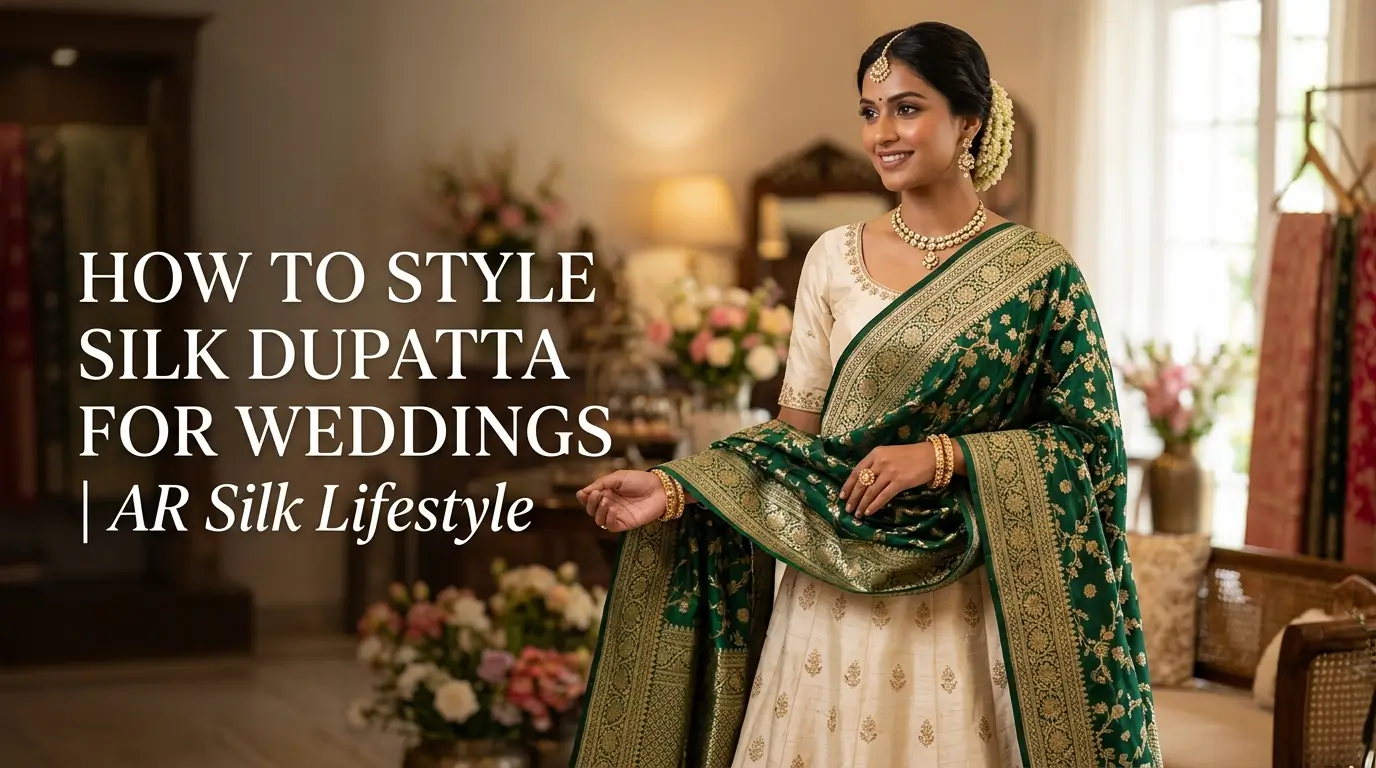
This is the approach experienced dressers rely on — when your dupatta is the most spectacular element, your outfit can afford to be quieter. A plain ivory silk suit with a richly woven Banarasi dupatta in deep red or bottle green doesn’t need jewellery to make an impression. The dupatta does the work.
Discover our range of Banarasi Dupatta styles — woven to honour the craft and designed to work across modern wardrobes.
How to Style Silk Dupatta with Salwar Suits
The salwar suit and silk dupatta is one of Indian fashion’s most enduring — and most underestimated — combinations. While most people associate silk dupattas with heavy bridal or ceremonial wear, silk elevates even everyday ethnic dressing when paired correctly.
With Anarkali Suits
An Anarkali’s flared silhouette already has natural drama. A silk dupatta in a complementary or contrasting tone completes the composition. For formal occasions, drape one end over the shoulder and let it trail behind. For more relaxed affairs, a loose wrap around both shoulders is effortlessly refined.
With Straight Kurta and Palazzo
This is the contemporary ethnic look that’s become the standard for festive gatherings that aren’t quite weddings. A straight kurta in silk or georgette with wide palazzo pants and a printed silk dupatta looks current without trying too hard. Tuck the dupatta loosely into a belt at the waist for a modern finish.
With Patiala Suit
The fullness of Patiala salwar pairs naturally with a dupatta that has weight and movement. A Banarasi silk dupatta or a printed pure silk dupatta over a Patiala suit is a traditional Punjabi combination that feels festive without being overly formal — particularly strong for morning ceremonies and family functions.
The One-Shoulder Pin Technique
This is the simplest silk dupatta styling technique that most people overlook entirely. Pin one end at the shoulder seam of your kurta — just a single clean pin — and let the rest fall naturally down your back. Your hands stay free, the dupatta stays in place, and the look is polished without a single fold out of place.
Silk Dupatta Styling for Festive Occasions
Festive dressing in India occupies its own register — not quite the formality of a wedding ceremony, but never casual. It’s the warm, celebratory middle space where you want to look genuinely dressed without feeling overdone. Silk dupattas belong in this territory more than any other fabric.
Diwali
Warm tones are your starting point — saffron, gold, deep orange, or peacock blue all bring instant festivity. The glow of diyas against silk fabric creates one of those visual combinations that never needs improving. Pair with a coordinating or contrast suit and keep jewellery traditional to let the dupatta lead.
Eid
Chikankari suits or pastel silk lehengas paired with a sheer silk or tissue dupatta are a natural Eid choice. Soft mint, blush, ivory, and powder blue sit perfectly against the softer colour palettes that characterise Eid dressing. The lightness of tissue silk makes it ideal for longer celebrations where comfort matters as much as appearance.
Navratri
Navratri is where silk dupattas earn their place on the dance floor — quite literally. The movement of a bright yellow or parrot green silk dupatta over a chaniya choli during garba is something synthetic fabric simply cannot replicate. Each of the nine nights has its traditional colour, and your dupatta is the easiest single element to use for honouring it.
Karwa Chauth and Teej
These occasions traditionally lean toward red, maroon, and deep pink. A Banarasi or embroidered silk dupatta in these tones, draped over the head, is both culturally right and visually striking. The richness of the fabric carries the weight of the occasion without needing additional embellishment.
Our Designer Dupatta collection includes festive-ready options across all these colour stories — pieces designed to carry occasion and character in equal measure.
Trending Dupatta Draping Styles
How you drape a silk dupatta changes the entire character of your look. The same piece of fabric can feel ceremonial, contemporary, romantic, or editorial depending entirely on the draping technique you choose.
The Classic Double Shoulder Drape
Both ends fall equally over each shoulder from the head or neckline. This is the most traditional placement — balanced, ceremonial, and the right choice for religious occasions and formal wedding ceremonies. If you’re wearing a heavily embroidered dupatta, this drape gives it the full stage it deserves.
The Front Pallu Drape
One end tucks at the waist; the dupatta crosses the body and falls as a long pallu at the front. It creates a saree-like silhouette without the complexity of actual saree draping — ideal for women who love the saree aesthetic but prefer the ease of a suit.
The One-Shoulder Drape
One end pins at the shoulder seam and the length trails behind or to one side. This is currently the most popular draping choice for receptions and modern-traditional occasions. It keeps the dupatta secure, displays the fabric fully, and leaves your movement unrestricted.
The Belt Drape
The dupatta is gathered at the centre and tucked into a statement waist belt. The fabric fans out above and below, creating volume and structure. This works best with heavier silk dupattas and is particularly effective for sangeet and reception looks where you need visual drama from across a room.
The Hair Pin Style
One end is pinned into the hair or anchored at the top of a bun, with the length flowing freely behind. Popular with brides and for editorial photography — the effect is romantic and slightly dramatic in a way that photographs remarkably well.
The Loose Shoulder Wrap
Both ends drape loosely over both shoulders without pinning, allowing the dupatta to move freely with you. This is the most relaxed of the draping styles and works best with lighter silk and tissue dupatta weights, especially for occasions where dancing or long wear is involved.
Best Silk Dupatta Colors for Indian Weddings
Colour matters more in a dupatta than in almost any other piece you wear — because the dupatta frames your face. The colour you choose affects how you photograph, how you look under different lighting, and how the overall outfit reads from across a room.
Classic Red and Gold
The eternal combination for Hindu wedding ceremonies. Red silk with gold zari border work is timeless for very specific reasons — it carries ceremony, tradition, and warmth in a single glance.
Deep Jewel Tones
Emerald green, sapphire blue, deep burgundy, and plum are strong choices for weddings where you want to look regal without approaching bridal territory. Against lighter skin tones, these colours are striking. Against deeper skin tones, they’re magnificent.
Champagne and Ivory
For brides and guests who prefer refinement over vibrancy, champagne or ivory silk with antique gold or silver embroidery offers a quiet luxury that stands out in its understatement. Particularly effective at evening receptions where the lighting is warm.
Pastels for Daytime Events
Blush, soft mint, lavender, and powder blue work well for daytime or outdoor wedding functions. In silk, even the softest pastel carries substance — the fabric prevents it from reading as washed out in natural light.
The Contrast Pairing Technique
Rather than matching your dupatta to your lehenga base colour, pick up one accent shade from the embroidery instead. A navy suit with mustard embroidery, paired with a mustard silk dupatta, creates a colour story that looks deliberately considered rather than assembled. This single technique separates styled dressing from coordinated dressing.
Common Styling Mistakes to Avoid
Even the most beautiful silk dupatta can fall flat when worn incorrectly. These are the mistakes that matter most:
Ignoring proportion.
A very heavy, wide dupatta on a petite frame overwhelms the look entirely. Match the weight and width of your dupatta to your build — lighter silks for smaller frames, more structured pieces for taller builds.
Letting it sit too far back on the head. When wearing a dupatta over the head, it should sit forward enough to frame the face — roughly two inches from the hairline. Pushed further back, it reads as an afterthought rather than a considered choice.
Over-pinning.
One or two pins, placed cleanly, are all a silk dupatta needs. Multiple pins along the length create bunching and take away from the natural movement that makes silk worth wearing.
Matching too literally.
A dupatta in the exact same fabric, colour, and pattern as your suit looks like a set rather than a styled outfit. Introduce variation — a different weave, a contrasting border, a tonal shift — for a look that feels composed.
Choosing synthetic silk for important occasions.
Polyester silk substitutes don’t drape, catch light, or age the way pure silk does. For weddings and formal festive events, the difference between authentic silk and a synthetic substitute is immediately visible in person and in every photograph.
What to Check Before You Buy
Shopping for a silk dupatta online is entirely manageable when you know what to look for. Here’s how to shop with confidence:
Check the fabric composition listing first.
“Pure silk,” “100% silk,” and “mulberry silk” indicate authentic fabric. “Art silk,” “silk-type,” or “silk-feel” are almost always polyester. The difference in drape, longevity, and appearance is significant and permanent.
Read the weight specification.
Silk is measured in momme (mm) — the higher the momme count, the heavier and more durable the fabric. For dupattas, 12–18 momme is the right range for good drape and weight. Anything below 10 momme tends to feel insubstantial.
Study the close-up photographs.
Reputable sellers provide detailed shots of the weave, the border work, and a full spread. These give you a genuine sense of embroidery density and fabric quality — things that a single styled photograph won’t show you.
Ask for natural light photographs.
Screen colour rendering varies considerably, and for a wedding or festival purchase, you want accurate colour before it arrives. Any brand that won’t send a daylight image is a brand to approach carefully.
Understand the price range.
Authentic pure silk dupattas typically start from ₹800–₹1,200 for lighter weights with simple borders. Handwoven Banarasi or heavily embroidered pieces range from ₹2,500 to ₹8,000 and above depending on the craft complexity. A “pure silk” dupatta listed at ₹400 is almost certainly not pure silk — real fabric has a cost floor that reflects the material and the making.
Check the return policy.
A brand that offers a reasonable return or exchange window for premium purchases is a brand that stands behind what it sells. For occasion wear especially, this flexibility matters.
Look at the craftsmanship description.
Hand embroidery, hand block printing, and traditional weaving techniques are worth more than machine alternatives, and they look it. A brand that specifies the technique is a brand that respects the craft — and the customer.
For added confidence when buying pure silk, look for the Silk Mark certification — India’s official quality assurance label for authentic silk products.
Shop Silk Dupatta, Banarasi Dupatta & Bridal Dupatta at AR Silk Lifestyle
You’ve read the guide. Now comes the part where the right dupatta has to actually exist somewhere — not just in a Pinterest board or a reference photograph, but at a real address, with honest fabric descriptions and craft you can trust.
At AR Silk Lifestyle, every piece in our collection is chosen with one standard in mind: it has to be something we’d confidently recommend to a bride on her wedding morning. Authentic fabrics sourced directly from weavers, embroidery done by skilled artisans, and styles curated for the modern Indian woman without compromising what makes traditional craft genuinely worth owning.
Whether you’re looking for a richly woven Banarasi Dupatta for a wedding lehenga, a light Organza Dupatta for a summer reception, or a statement Designer Dupatta for Diwali — our collections cover every occasion, every aesthetic, and every budget range.
Not sure where to start? Our Silk Dupatta collection is the right first step — filtered by fabric, occasion, and embellishment so you can shop by what matters to you, not just by what’s featured on the homepage.
Explore Silk Dupatta | Banarasi Dupatta | Bridal Dupatta | Designer Dupatta | Organza Dupatta
FAQs
Q1. Which silk is best for a dupatta for weddings?
Pure Banarasi silk and Kanjivaram silk are the top choices for main wedding ceremonies — their weight, sheen, and ability to carry heavy embellishment make them the natural fit for formal occasions. For lighter events, summer weddings, or morning functions, tissue silk and georgette silk offer a better balance between elegance and practical comfort. Whichever variety you choose, always prioritise pure silk over synthetic alternatives — the difference in drape and appearance is visible in every photograph.
Q2. How do I keep a silk dupatta in place without it slipping?
A single saree pin or dupatta pin placed at the shoulder seam is the most reliable method. For head draping, one light hair pin placed discreetly at the crown holds the fabric without damaging it. The key word is single — one well-placed pin is more effective than three pins fighting each other. Over-pinning creates bunching and removes the natural movement that makes silk worth wearing.
Q3. Can I wear a silk dupatta with a cotton or linen suit?
Not only can you — it’s one of the more underrated combinations in ethnic dressing. A pure silk dupatta adds immediate occasion-worthiness to a cotton or linen kurta, and the contrast of textures makes both fabrics look more considered. The one thing to watch is weight: a very heavy Banarasi may overpower a light cotton suit, while a printed silk or tissue silk drapes over it naturally. Match the dupatta weight to the suit weight and the combination works.
Q4. What’s the difference between a Banarasi silk dupatta and a regular silk dupatta?
The defining difference is technique. A Banarasi dupatta is woven on traditional handlooms in Varanasi, with the pattern created by interlaced warp and weft threads — often incorporating real or imitation zari (metallic yarn). The design lives inside the fabric structure, not on top of it, which is why Banarasi work has that characteristic depth and density. A standard silk dupatta typically features a design added afterward through printing or surface embroidery. Both are beautiful; Banarasi is simply in a different technical category.
Q5. How should I wash and care for a pure silk dupatta?
Handle pure silk gently and it will last for decades. Hand-wash in cold water with a mild, pH-neutral detergent — or dry-clean for embroidered pieces where hand-washing risks damaging the threadwork. Never wring silk; press water out gently and lay flat to dry in shade away from direct sunlight. Iron on the lowest heat setting with a thin cotton cloth between the iron and the silk. Store wrapped in clean muslin rather than plastic — plastic traps moisture and deteriorates silk over time.
Q6. What silk dupatta colours work best for a wedding guest?
Jewel tones — emerald, sapphire, deep burgundy — are universally strong for most Indian weddings. For daytime or outdoor ceremonies, dusty rose, soft gold, and champagne are more appropriate to the light and setting. One colour worth approaching with care: red or deep bridal pink. In many Indian traditions, these tones are culturally reserved for the bride. It’s always worth considering the wedding’s specific traditions before making your colour choice.
Q7. Can silk dupattas be worn for festive occasions other than weddings?
Silk dupattas are actually at their most versatile on the festive circuit — Diwali, Eid, Navratri, Durga Puja, Karwa Chauth, and family celebrations all benefit from the fabric’s natural sheen and drape. The key is matching the silk weight to the occasion. Lighter varieties like printed silk and tissue silk are ideal for festive gatherings where you want to look dressed without the full weight of wedding-level embellishment.
Q8. What is the difference between a silk dupatta and an organza dupatta?
Silk and organza serve different purposes in bridal and festive dressing. Pure silk has more weight and opacity — it drapes in soft, full folds and carries the gravity needed for ceremonies that require coverage and formality. Organza is lighter, crisper, and more structured — it holds its shape and has a sheerness that creates movement and air. Many brides now choose both: a silk dupatta for the main ceremony, and an organza dupatta for the evening reception. Explore our Organza Dupatta collection to see the two fabrics side by side.
Q9. How do I choose the right dupatta width for my height and build?
As a starting point: narrower dupattas (28–32 inches wide) work better for petite frames and don’t overwhelm the silhouette. Standard width (36–42 inches) suits most builds and is the safest choice when buying online without being able to try first. Wider dupattas (44 inches and above) work best on taller frames where the proportions balance naturally. When shopping for a silk dupatta online, always check the width measurement in the product listing — it makes a more visible difference to the final look than most buyers expect.
Why Trust AR Silk Lifestyle?
AR Silk Lifestyle is based in Lajpat Nagar, Delhi and specializes in premium silk dupattas, Banarasi dupattas, bridal dupattas, and designer ethnic wear. Our collections are curated from trusted artisans and weaving communities to ensure authentic craftsmanship and lasting quality.
Conclusion
A silk dupatta is one of those rare wardrobe investments that pays back every time you reach for it. Style it for your cousin’s wedding this December. Drape it differently for Diwali next month. Pass it to your daughter in twenty years and watch her find her own way to wear it.
What makes silk dupattas so enduringly valuable isn’t just the fabric or the craft — it’s their ability to adapt. To a ceremony, to a season, to a sense of personal style that shifts over years. The same piece of silk can look ceremonial or contemporary, opulent or understated, depending entirely on how you choose to carry it.
The styling knowledge matters. The fabric choice matters. And where you buy matters just as much.
At AR Silk Lifestyle, we’ve built our collection around a single standard: every piece should make the woman wearing it feel both genuinely beautiful and completely certain of what she bought. Every silk dupatta, every Banarasi weave, every embroidered piece in our range comes from artisans who have spent lifetimes learning their craft — and fabrics that are exactly what they claim to be.
The right dupatta has a way of making everything else fall into place. And years later, when you look back at the photographs, it’s often the dupatta you remember most.
Discover premium silk dupatta styles for weddings and festive wear at AR Silk Lifestyle — crafted to be worn, remembered, and passed on.